 پرش به محتوا

Paraformaldehyde is a chemical compound with the chemical formula (CH₂O)n that is obtained from the polymerization of formaldehyde. In fact, this polymer is composed of 78 to 98 percent formalin.
Paraformaldehyde is available in the form of white powder, granules, or solid tablets on the market and is one of the solid forms of formaldehyde, which itself is a colorless gas with a pungent odor.
Paraformaldehyde is used in many industries and laboratory applications due to its chemical properties and ability to dissolve in water and convert to formaldehyde.
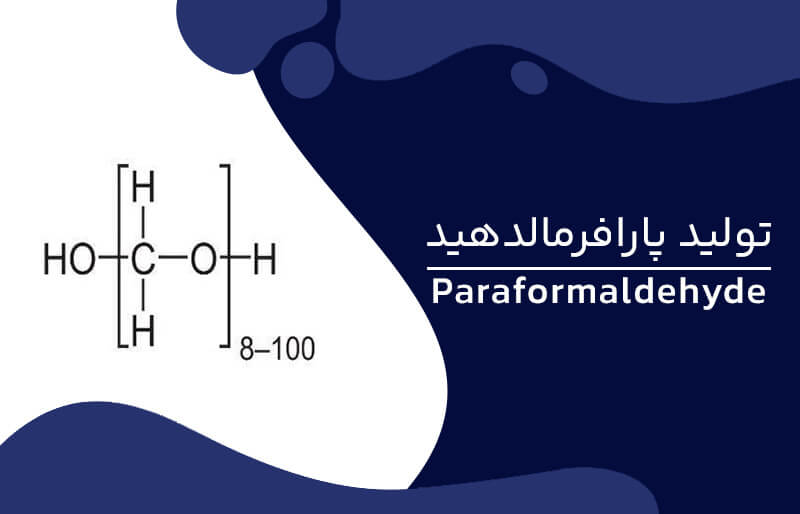
Chemical properties
In the table below, you can see the chemical characteristics such as melting point, chemical formula, density, etc. of the chemical composition of paraformaldehyde:
Chemical properties | Description |
IUPAC name | Polyoxymethylene |
Molecular formula | (CH₂O)n |
Molar mass | 30.03 g/mol |
Melting temperature | 120 degrees Celsius |
Boiling temperature | Decomposes |
Density | 1.42 g·cm-3 |
Solubility in water | 400 g/L (at 20°C) |
Acidic | 2.8 – 4 |
Benefits of Paraformaldehyde
It is easily converted to its parent substance, formaldehyde.
It acts as a type of storage or portable source for formaldehyde.
It has disinfectant and stabilizing properties that are useful in laboratories and medical environments.
Application of paraformaldehyde
Industries where solid paraformaldehyde is used include:
- Active pharmaceutical ingredients
- Resistant printing inks
- Abrasives and polishes
- Raw material for glyphosate production
- Industrial disinfectants
- Automotive paints and coatings
- Electrical and waterproof insulations
- Advanced ion exchange resins
- Production of thermal and acoustic insulation foams
- Thermal resins and resistant coatings
- Agricultural pesticides and fungicides
- Phenolic polymers for industrial resins
- Textile dyes and engineering plastics
- High-tack industrial adhesives
- Improving mechanical and chemical properties of paper
- Additives for improving the properties of rubber and plastics
Paraformaldehyde production method
Paraformaldehyde is obtained from the polymerization of formaldehyde. In this process, liquid formalin is converted to a solid state under specific conditions. This process is typically carried out in a controlled environment and using specific catalysts to ensure complete polymerization and produce a high-purity product.
Dangers of paraformaldehyde
- This material is flammable and should be kept away from flame and light.
- Levels above 0.1 ppm cause skin and respiratory sensitization.
Inhalation of paraformaldehyde vapors can cause irritation and - inflammation of the respiratory tract.
- Appropriate protective equipment should be used to prevent potential hazards when working with this material.
Paraformaldehyde storage conditions
- Store in a cool, dry place
- Avoid direct sunlight and heat
- Avoid contact with water
